

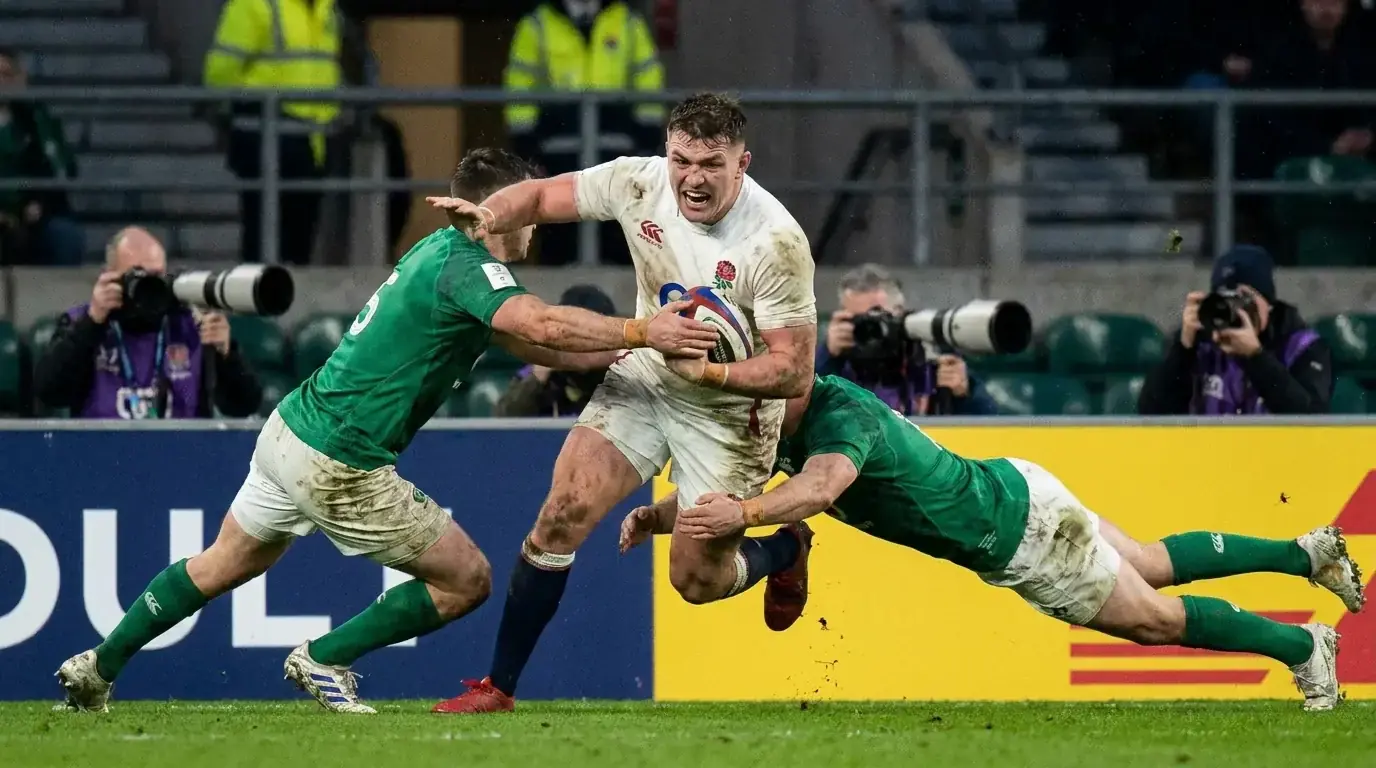
The shift from pre-match to in-play in UK rugby betting has been one of the most consequential structural changes I’ve watched over my decade in this market. Live wagering now accounts for more than 70 per cent of all online sports betting volume in the UK, and rugby — with its slow ebb and sudden surges — is one of the most reactive codes to live odds. A try in the corner is worth seven points and a sudden 5 to 10-point swing on the handicap line. A yellow card removes a player for ten minutes and can hand the opposition a fifteen-minute period of statistical advantage. The market reprices in seconds.
What’s interesting about rugby live betting is that the volatility isn’t random — it’s structured around three or four kinds of moments that recur in every match. Once you can identify them, in-play stops being a reactive scramble and becomes a market you can prepare for. That preparation, more than any reflex, is what makes the difference between profitable live staking and the slow bleed most punters experience.
What Live Markets Do That Pre-Match Doesn’t
The first thing pre-match punters notice when they shift to in-play is the constant re-pricing. A handicap line that sat at England −10 at kickoff might move through −8, −5, −12, −7 over a forty-minute first half as scoring events accumulate. Every try, every penalty, every card prompts the pricing engine to recalculate the implied probability of the remaining outcomes, and the new price is on screen before the camera has finished the celebratory replay.

The second thing is market suspension. Live betting platforms freeze markets at specific moments — most commonly during a TMO review, sometimes during a long scrum reset, occasionally during medical attention to a player. A market that’s suspended isn’t accepting new stakes and isn’t honouring cash-out requests until the on-field situation resolves. The suspension is brief, usually under thirty seconds, but it’s enough to deny you the opportunity to act on the obvious read.
The third — and most useful — feature of live rugby betting is partial cash-out. You can lock in a portion of a position’s current value while leaving the rest exposed to the rest of the match. We’ll come to the cash-out mechanics shortly, but it’s worth noting that this feature alone reshapes how I think about pre-match stakes. The option to take partial value at half-time gives the pre-match bet a richer payoff structure than fixed odds would otherwise allow.
The Live Markets That Actually Matter for Rugby
The headline live market is the rolling handicap and totals line. Both reprice continuously, both are usually available on Asian two-way structures (no draw line) during live betting, and both account for the bulk of in-play volume on rugby. Beyond that, the live menu opens up four markets that simply don’t exist pre-match: race to points, next try scorer, next score type, and period totals.
Race to points — typically race to 10, 15 or 20 — is a head-to-head on which team will reach the chosen threshold first. The pricing reacts immediately to scoring events and to territory. A team camped on the opposition five-metre line for three phases will see its race-to-points line shorten before the try has actually been scored. The market is essentially a short-horizon momentum bet, and it’s the live market I lean on most when I have a clear read on which side is dominating territory in a specific patch of the match.

Next try scorer is a fresh market opened after each try is scored, listing every player still on the pitch with prices reflecting their proximity to the action. Next score type — try, penalty goal, drop goal, no score — is a niche live bet that pays out on the next scoring event of any kind. Period totals split the match into smaller chunks (next ten minutes, rest of the half) with their own over/under lines. None of these live markets exist pre-match. All of them reward punters who can read momentum faster than the pricing engine.
Yellow Cards, Sin Bins and the Single Biggest Price Move in Rugby
If you remember one in-play rugby pattern, make it this one. A yellow card to a key playmaker is the single largest predictable price swing in the live market. The mechanics are unforgiving: ten minutes off the pitch with fourteen men, the opposition gets the equivalent of a slight power-play, and empirical data over hundreds of matches shows an average swing of three to five points on the scoreboard during that ten-minute window. On the handicap line, that translates to an immediate price move of around the same magnitude — sometimes more if the carded player is a fly-half or a starting front-row.
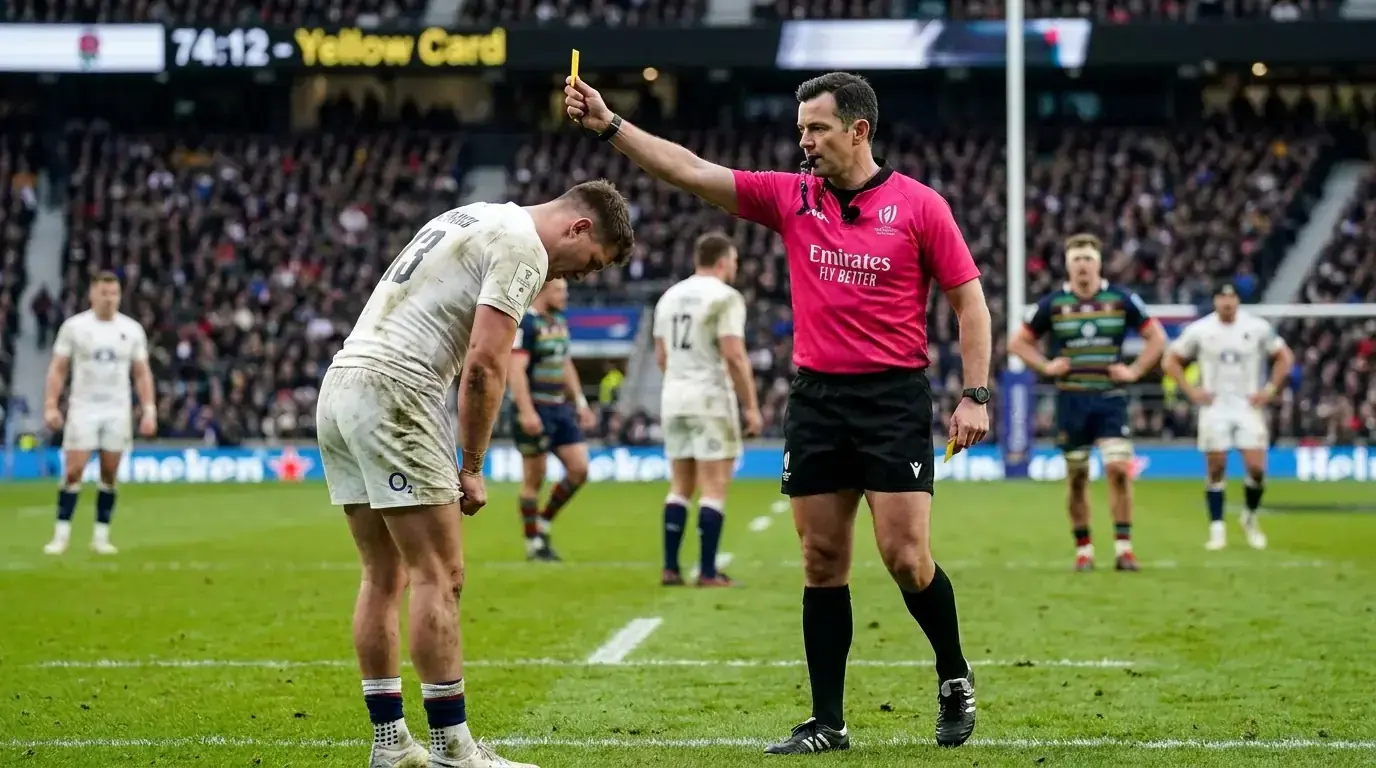
What punters miss is the pre-card pricing inefficiency. The card hasn’t been issued yet, but the act of foul play has. A high tackle has just gone to the TMO bunker for review. The market doesn’t know whether the bunker will return a yellow, a 20-minute red, or play on — but the probability distribution of those three outcomes is non-trivial. I price the expected card outcome during the bunker delay and stake the handicap I think the line should be once the call lands. By the time the verdict comes through, my stake is already at the better price, and the live market is catching up to where I already was.
One footnote on 20-minute red cards, which are now standard at the international level. The carded player is replaced after twenty minutes, meaning the team plays the rest of the match with fifteen but loses a specialist in the affected position. The price swing here is larger than yellow card but smaller than the old-style full red — typically six to ten points on the handicap, depending on which position is gone. The market handles this competently most of the time, but the few seconds between the card being shown and the line settling can be the most price-rich window in rugby in-play betting.
Suspensions, TMO Calls and What You Can’t Do
You can’t bet during a TMO review. Most operators suspend the relevant markets the moment the referee signals to the bunker, and they don’t reopen until the verdict is confirmed and the restart begins. The same applies during a long scrum reset cycle, a heavy medical timeout, and certain pre-set kicking sequences. Operators err on the side of suspending more rather than less, partly to protect themselves from punters with faster live feeds than the in-play product can match.

The other suspension trigger worth knowing about is the moments immediately after a try is grounded and before the conversion is taken. Most markets pause for around ten to twenty seconds while the try is confirmed and the new prices are pushed. If you try to act in that window, your stake request will sit in a queue and either be accepted at the new price (potentially worse than the one you saw) or rejected. The latter is more common, and it’s why reactive in-play betting punishes punters who haven’t formed a view in advance.
Cash-Out and Live Markets Together
The combined use of in-play betting and cash-out is what makes the live market more than a sequence of standalone stakes. A pre-match handicap that’s running ahead can be partially cashed out at half-time to lock in some value while leaving the rest exposed. A live race-to-points bet that’s looking good with three minutes left can be cashed out fully to escape the late-match volatility. The trade-off is always the bookmaker’s margin on the cash-out value — typically 3 to 8 per cent below the implied live odds — and that margin is what makes the option a defensive tool rather than a value-positive one.

The full mechanics of how cash-out values are calculated, when partial cash-out works in your favour, and how auto cash-out triggers can protect a position without you watching the match, are worth a separate read. The cash out mechanics on rugby bets sit alongside live betting as a paired toolkit, and using one without understanding the other leaves money on the table both ways.
A final framing thought. There are 13.5 million active monthly online accounts in the UK, and the share of those engaging with live betting on rugby weekends keeps climbing. The market is liquid, reactive and aggressive on margin. The only way to be on the right side of it consistently is to stake from a prepared view, not a reflexive one.
