


Five weekends in a row. Fifteen matches. Six teams. February to March, the Six Nations is the biggest annual fixture-driven betting window in the northern hemisphere, and that compression is what makes it different from any other rugby tournament I trade. A Premiership season stretches across nine months. The Champions Cup spreads its pools and knockouts over a similar window. The World Cup arrives once every four years. The Six Nations packs the most concentrated cross-border rugby action of the calendar into roughly six weeks, and every weekend pushes a new wave of outright shifts, handicap repricings and try-scorer specials onto the boards.
The numbers carry the point. The 2025 men’s Six Nations drew 1,050,465 spectators across 15 matches — an average of 70,031 per fixture, the kind of attendance that puts the tournament in a category occupied by only a handful of annual sporting events worldwide. That foot traffic translates into the kind of liquidity bettors care about: deep books, tighter prices on the main markets, more bookmaker willingness to stand a line that might tighten by 50% over a fortnight.
What follows is the bettor’s read of the tournament — format, outright pricing, match-by-match dynamics, historical patterns that matter and a few traps that catch people who treat Six Nations matches like generic Test rugby. I have priced enough of these tournaments to know which questions the markets actually answer, and which ones they leave to the punter to figure out.
Round-Robin Across Five Weekends
When Italy beat France in the final round of the 2023 tournament, knocking the French out of contention for the title with a single result, that was the format doing what only the Six Nations format can do — making the last weekend matter for almost every team in the table. No knockout brackets. No semi-finals. Every match counts toward the standings, and the maths of those standings is what creates the season’s tradable narrative.
Round-robin is the structure. Each of the six teams — England, France, Ireland, Wales, Scotland, Italy — plays the other five exactly once across five weekends. Home and away rotate year to year, so a team that hosted England in Cardiff one season travels to Twickenham the next. Fifteen matches in total. No extra fixtures, no second leg, no playoffs.
The competition layers two prize structures on top of the basic table. The Grand Slam belongs to any team that wins all five of its matches. It is the hardest single achievement in northern hemisphere rugby because the schedule guarantees at least two top-tier away trips for any contender. The Triple Crown is the smaller historic prize contested between the four home unions, taken by beating the other three home nations in a given tournament. The Wooden Spoon, at the other end, falls to the team that finishes bottom of the table.

The points system rewards more than wins. A victory pays four league points, a draw two and a loss zero. Two bonus points are available on top: one for scoring four or more tries in a match, and one for losing by seven points or fewer. That losing bonus matters more than newcomers realise. A side that loses three matches by a converted try each could still finish above a team that won three but lost two by 20 points apiece. The system rewards attacking ambition and rewards staying close in defeat.
One additional wrinkle: a side that wins the Grand Slam also picks up a three-point bonus on the table, a 2017 rule introduced to ensure a team going 5-0 cannot finish behind a team going 4-1 with the same bonus-point haul.
What the Numbers Say About Tournament Scale
Six Nations weekends are the only February-March events I know where pub television screens, broadsheet supplements and family conversations all converge on rugby simultaneously. That convergence is not accidental. It is the product of one of the most commercially loaded annual properties in northern hemisphere sport, and the bettor benefits from it directly.
Start with the gate. The 2025 tournament’s 1,050,465 attendance across 15 matches is a figure most annual sporting properties cannot reach — 108 tries scored at an average of 7.2 per match adds the on-field drama that those stadium audiences came to see. Then the media revenue: the 2025 tournament generated $135.24 million in media revenue from broadcast agreements with the UK, France, Italy and Ireland combined, and that figure has trended upward each cycle as broadcasters extend rights deals to keep the tournament on free-to-air or part-subscription packages.
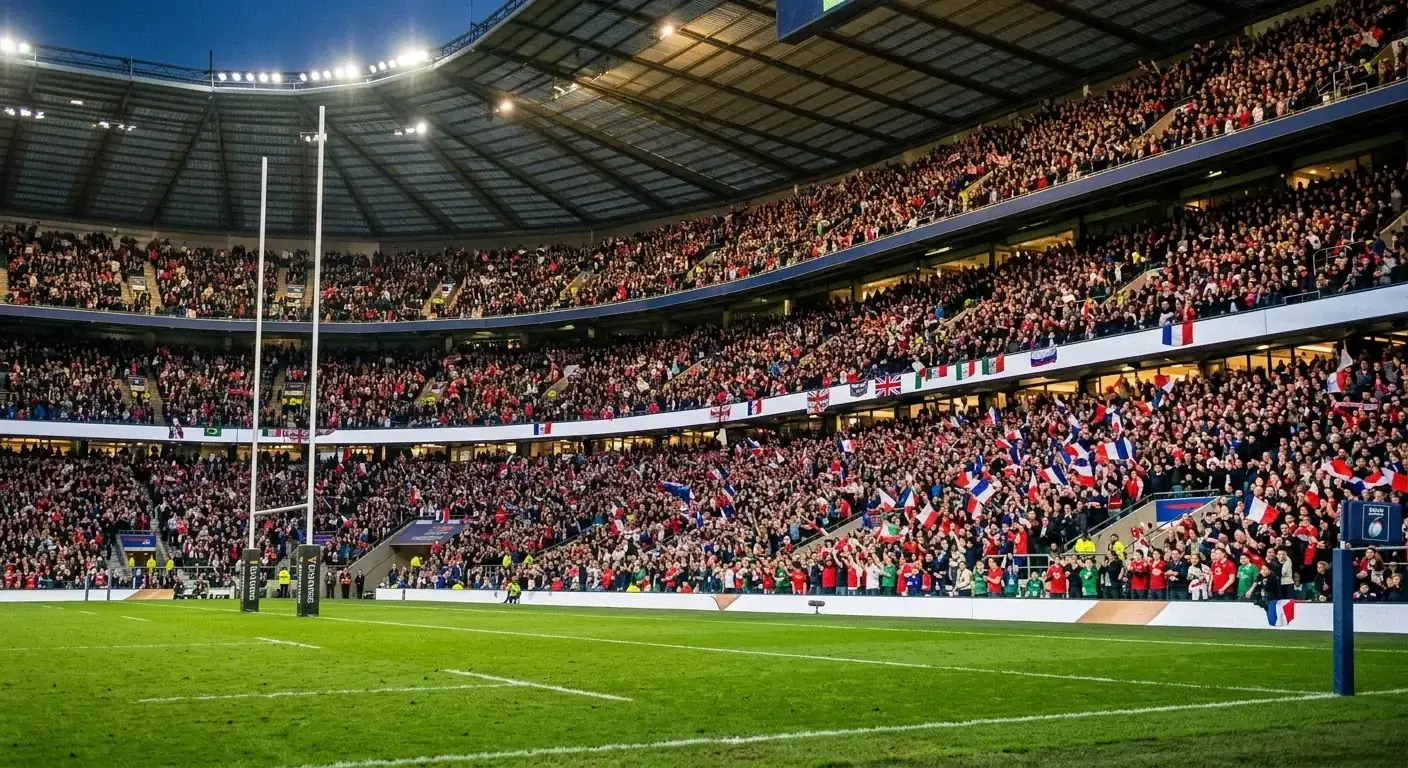
Sponsorship reinforces the commercial weight. Guinness has been the title sponsor since 2019, with the current contract running at approximately £15 million per year ($18.83 million). That is one sponsor, one tournament, one slice of the total revenue stack. Add the broadcast partners, the secondary sponsors and the venue partnerships, and the Six Nations sits among the highest-grossing annual rugby properties globally.
What does this mean for the bettor? Liquidity. Every UK-facing bookmaker prices the tournament hard from outright through to specials, and the depth of trading volume means tighter overrounds on match-winner and handicap markets than you will find on a midweek URC fixture. The peak viewership numbers also tell you which matches will get the deepest books. The 2025 opener, France 43-0 Wales, pulled 7.4 million viewers at peak on France 2, and the ITV broadcast of England versus France peaked at 6 million on ITV1 and ITVX. Those are the fixtures where in-play markets stay open with deep prices through the full 80 minutes. The Italy-Scotland midweek slot will not match that depth. Knowing the difference matters for staking decisions.
Outright Books and How They Move
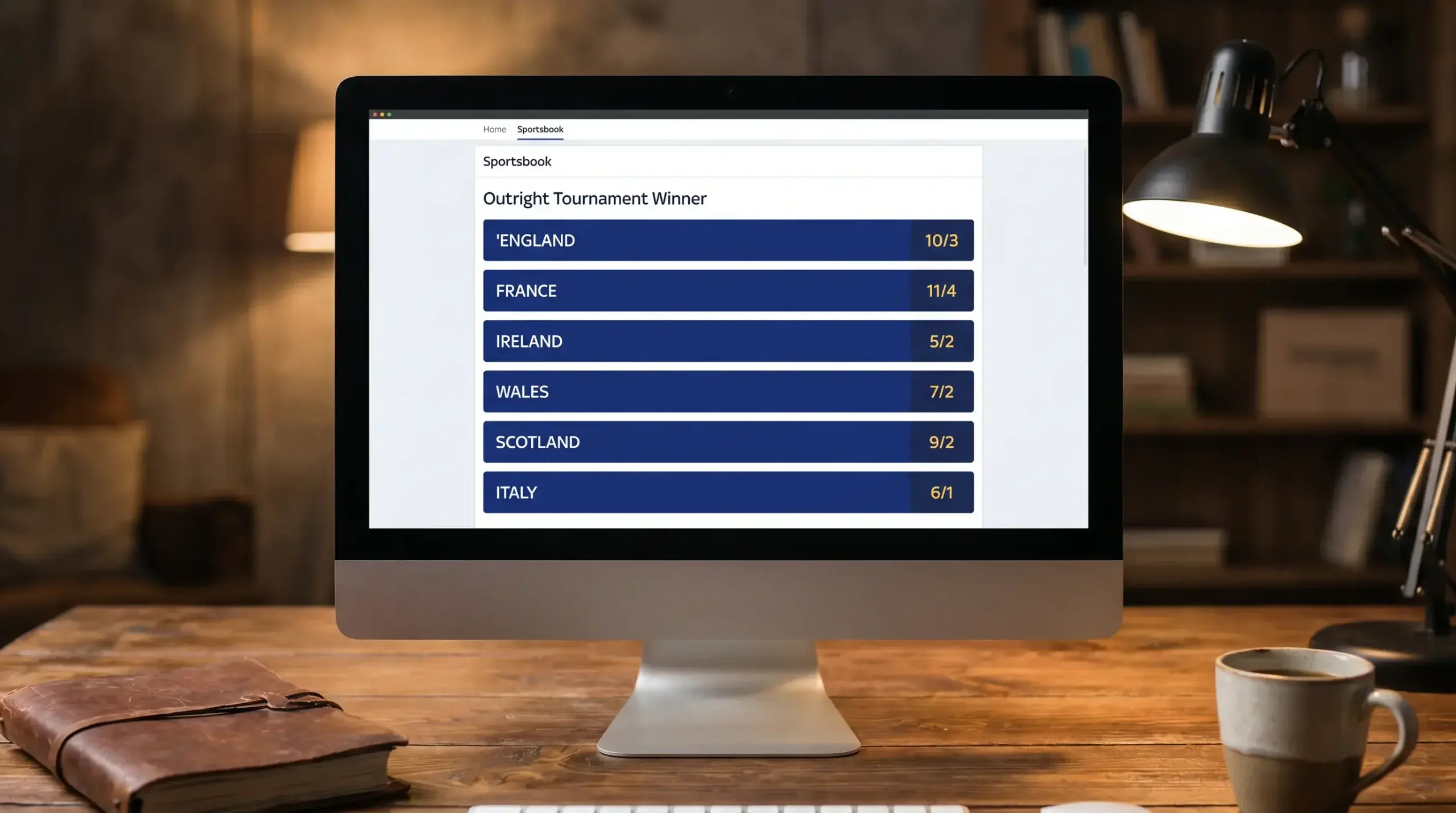
Outright markets are where I do my heaviest pre-tournament work, because their pricing window is the longest and the volatility across the five weekends is dramatic. A team priced at 9/2 to win the championship in early December can shorten to even money by the end of Round 2, or drift to 12/1 if it loses its opener away from home. Few rugby markets move that fast.
Tournament winner is the headline. Six teams, three favourites in most years (England, France, Ireland) and three longer prices (Wales, Scotland, Italy). The favourites usually sit between 2/1 and 4/1 pre-tournament, with the longer prices stretching from 14/1 to 100/1 for Italy in most modern seasons. The overround on this book is moderate compared to specials — six selections, no overlap with other markets, clean settlement.
Grand Slam Yes/No is one of the highest-margin markets in the entire tournament. The Yes side typically opens around 11/4 for the favourite and lengthens to 5/1 for second-string contenders. The implied probability of any Grand Slam being won in a given year — across all six teams combined — has historically run at around 30 to 35% in modern tournaments, which means the No side typically carries the bookmaker’s edge.
Triple Crown is a smaller market with four selections, with prices that swing harder after Round 1 because each team only plays one or two other home unions in a given weekend block. Wooden Spoon typically prices Italy as the short favourite at around 5/4 to 6/4. Top Try Scorer often opens months before the tournament starts and shortens dramatically once the first weekend’s tries are scored.
The outright pricing pattern I have learned to watch closely is the post-Round-1 repricing. Tournament winner odds shift the most. A team that wins its Round 1 fixture by 30 points away from home will often see its title odds halve overnight. A team that loses its opener by a single point at home will see its odds lengthen by 50%. That repricing creates the betting window for what traders call “second-Saturday value” — the moment when the market has overreacted to a single result and the closing odds before Round 2 do not reflect the underlying probability.
Settlement on outright markets is straightforward. Tournament Winner settles on the final standings after Round 5. Grand Slam Yes/No settles only if a team wins all five matches — a 4-1 record with no losing bonuses does not count. Wooden Spoon settles on the bottom finisher, including ties resolved by points difference. Top Try Scorer settles on tries officially recorded in the championship’s stats, with penalty tries typically excluded depending on operator rules.
Match-by-Match Lines During the Tournament
The Wales-versus-Ireland fixture of Round 1 in 2024 opened with Ireland priced at -14 on the handicap. By kick-off the line had moved to -11. By half-time, with Ireland leading by only three points, the in-play handicap was at Ireland -3.5 for the second half. Three different markets, three different handicap reads, one match.
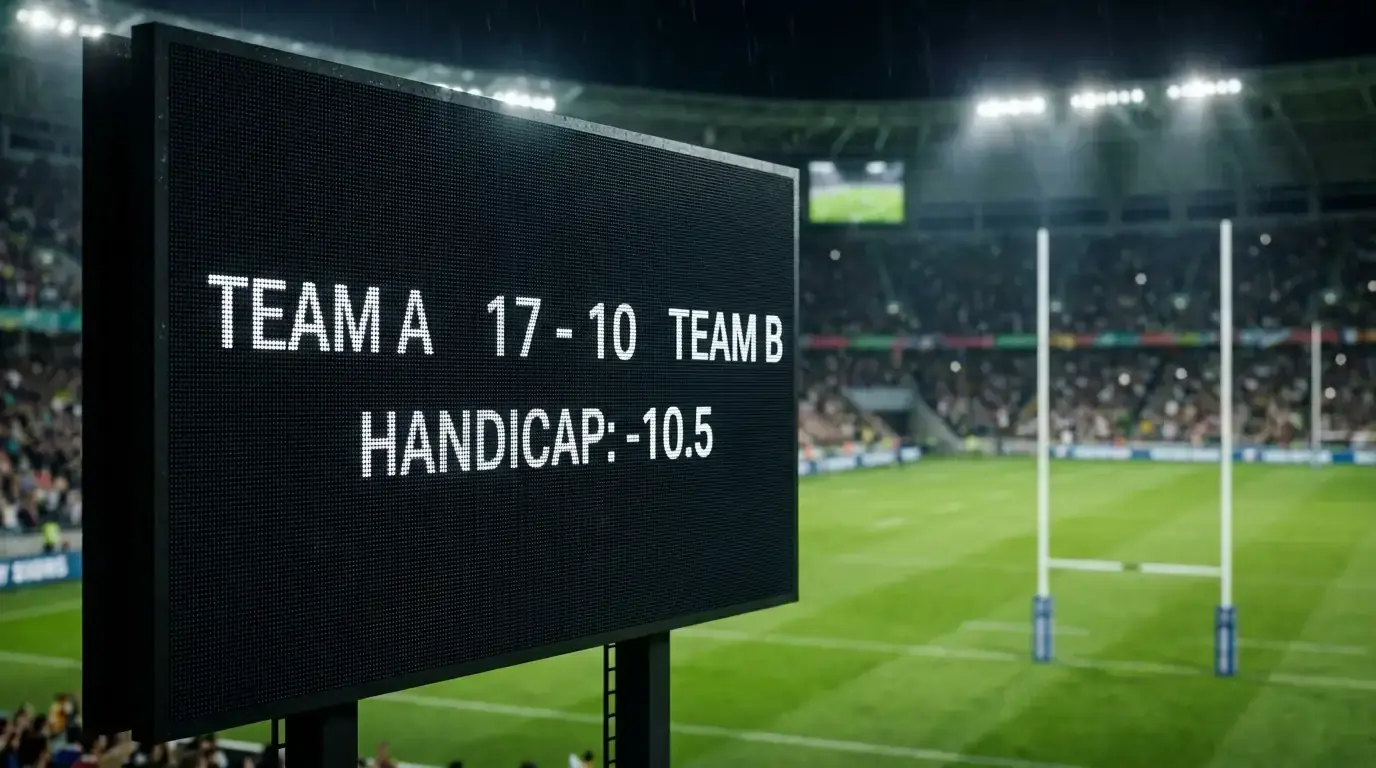
Handicap is the workhorse market across the tournament. Lines typically open between -7 and -14 for the favourite in any given fixture, with the wider spreads reserved for the France-Italy and England-Italy matchups, which often open above -20. A -10 line is more common in Six Nations than in autumn internationals because of the parity inside the field — the gap between the third-ranked team and the fifth-ranked team is small enough that a -10 line genuinely splits the result.
Try-scorer markets are where the value-hunters concentrate during Six Nations weekends. First-try-scorer overrounds run typically in the 18 to 25% range, but the volume of named selections is higher because the rotation of starting backs across the six teams means more individual scorers receive lines. Louis Bielle-Biarrey, Thomas Ramos and Joe Marler are examples of named scorers who have all sat as priced selections across recent tournaments — wingers and fullbacks tend to attract shorter prices than back-rowers because of the positional bias toward backs scoring tries in the modern game. Anytime try scorer offers the same depth at lower margin (12 to 15%) and tends to be the more popular casual-bettor market.
Team totals are the market that rewards understanding venue and weather better than overall ability. France’s team total over/under at the Stade de France in fair weather typically opens around 27 to 30 points. The same France side away at Murrayfield in late February will see its team total open around 22, even if Scotland is the same opposition strength. The venue swing accounts for roughly 5 to 8 points on a team total, which is a meaningful edge for bettors who understand those specifics.
Race to points markets — race to 7, race to 10, race to 20 — open before kick-off and continue to reprice in-play. They settle on which team reaches the threshold first, and the odds shift dramatically once the first try is scored. A team that opens race-to-10 at 5/6 will move to 1/3 if it scores within ten minutes. These markets are the cleanest in-play products to understand because the settlement rule is unambiguous: first to the threshold wins, regardless of final score.
One settlement note worth flagging: the Six Nations does not use extra time during the round-robin matches, so all bets settle on the regulation 80 minutes — no overtime considerations as you would face in knockout fixtures of the Champions Cup or the World Cup.
What Twelve Years of Data Tells You
The home advantage in Six Nations is bigger than the home advantage in any other rugby competition I have priced, and that gap is the starting point for any historical-pattern analysis. Twickenham, the Stade de France, the Aviva — each of these venues skews the result by approximately 10 points compared to the same fixture played on neutral ground. That is not opinion or feel. That is the average margin difference between matches played at the host venue and matches played at the visiting venue across the past twelve seasons, controlling for opposition strength.
Friday-night kickoffs are a pattern that has only emerged in the past decade as broadcasters spread the schedule beyond the traditional Saturday-Sunday window. Wales-Ireland Friday-night fixtures average lower total points than the same fixture on Saturday-afternoon broadcasts — typically 4 to 6 points lower per match. The leading theory is the surface and ambient temperature both being cooler under Friday-night floodlights, slowing the ball and the pace of play.
Weather-driven low totals are the most reliable historical pattern in the tournament. Murrayfield in February rarely sees match totals above 45 points, with the average around 38 to 40 across the past dozen tournaments. Cardiff in cold weather behaves similarly. The Stade de France in March, with a closed roof or clear evening conditions, averages closer to 50 to 52. The line move-rate for totals on weather-affected fixtures can hit 4 to 6 points within 48 hours of kick-off as forecasts firm up.
The most interesting strategic question is whether the bookmaker’s posted odds reflect the underlying probability of outcomes. The Ruck analysis of statistical forecasting at the 2023 Rugby World Cup found that at the 2023 Rugby World Cup, favorites crossed the finish line at rates almost identical to what was forecast by the stat models, not by crowd intuition or the bookmakers’ posted odds. The numbers tell a clear story, the average prediction error stayed below 6 points per game over 48 matches, a lower mark than you’ll usually find from posted bookmaker predictions. Statistical models outperforming the bookmakers on point-spread prediction is the kind of edge that, if it persists into Six Nations data, would be the strongest argument for model-driven betting strategy. The caveat is that the model edge in the analysis was on closing predictions, not opening prices.
What that means for the Six Nations bettor is that historical patterns matter, but they are increasingly priced in. A model that flagged the Twickenham home advantage in 2010 had a sharp edge over the closing market. The same model in 2025 finds most of that edge already baked into the line. The bettor’s job becomes finding the patterns that are not yet fully priced — weather-driven totals in mid-February rounds before forecasts firm up, or post-Round-1 outright repricing that overreacts to a single anomalous result.
Where and When the Tournament Plays Out
Three different broadcasters across three different time zones, with a typical weekend running Saturday-Saturday-Sunday — the Six Nations weekend rhythm is a relic of the multi-broadcaster shared-rights deal that has shaped the tournament since the 2010s. The UK splits coverage between the BBC and ITV under the current rights agreement, with each broadcaster taking a portion of the fixtures. France gets France 2 for the majority of its national-team matches. Italy carries the tournament on RAI. Ireland and Scotland sit within the UK rights package.
The kickoff windows matter for betting because they affect liquidity and in-play depth. The traditional Saturday 2:15pm and 4:45pm windows carry the deepest in-play markets — these are the slots where casual bettors and rugby pubs converge. The Friday-night and Sunday-afternoon slots are smaller-volume windows, though the prime fixtures in those windows still attract substantial books. The 2025 opener, with France 43-0 Wales pulling 7.4 million peak viewers on France 2, and the ITV England versus France broadcast peaking at 6 million on ITV1 and ITVX, are illustrative of which fixtures get the deepest pre-match and in-play markets.
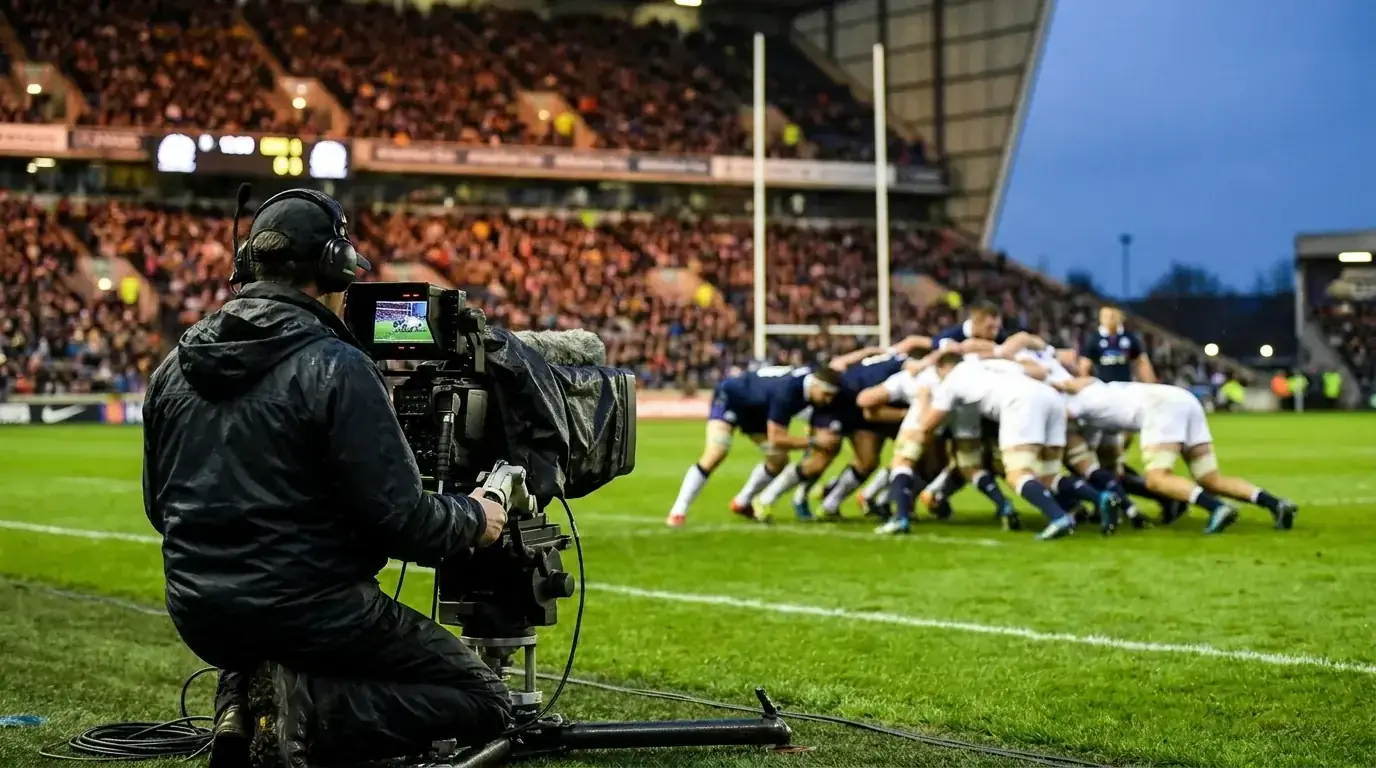
A practical betting note: in-play markets for the marquee fixtures stay open through almost the full 80 minutes with deep prices, but the smaller fixtures may see in-play markets temporarily suspend at scoring events or during key referee decisions. The depth of book is a function of the underlying volume, and the broadcast audience is the proxy for that volume.
Six Profiles, Six Pricing Profiles
Six teams, six different market profiles. The bookmaker’s outright odds tell you the overall ranking, but the individual betting fingerprint — which markets each team systematically over-performs or under-performs across recent tournaments — is what creates the specific value angles. Here is the read I would carry into a tournament window for each side.

England
The market typically prices England between 2/1 and 4/1 for the title each year, depending on autumn-international form and home-fixture distribution. Where England consistently trades sharper is in the disciplinary specials — over 1.5 yellow cards is a market that the side hits more often than the implied probability suggests. Match-winning margin bands of 1 to 12 points are where England’s matches typically settle, reflecting a side that wins or loses close more often than its outright ranking might predict.
France
The Stade de France pricing of France is one of the strongest home-venue effects in the tournament. France team total over/under at the Stade often opens around 28 to 32 points and France’s match handicap at home typically runs -10 or wider. Away from home, French team totals drop by 5 to 7 points and the handicap shrinks accordingly. France carries the highest expected try count of the six sides in most recent tournaments, which makes anytime try scorer markets on French wingers and centres a focal point of pre-match books.
Ireland
Ireland’s market profile is the most consistent of the six. Match-winner odds shorten less than other sides between opener and Round 5, total points lines run between 47 and 53, and the handicap lines settle in the -7 to -12 range in matches Ireland is favoured to win. Where Ireland trades differently is in the second-half over markets — Ireland’s match shape often favours late-game phase pressure, and second-half team totals tend to exceed pre-match implied lines more often than the average team across the field.
Wales
Wales is the volatility selection. The market re-prices Wales harder on Round 1 results than any other side, with odds movement of 30 to 50% between pre-tournament and Round 2 not unusual. Wales also carries one of the higher losing-bonus rates in recent tournaments, which makes outright table-position markets that reward bonus-point haul a more interesting angle than direct match-winner bets on close fixtures.
Scotland
Scotland’s profile is the under-bettor’s profile. Murrayfield in February averages low total points, Scotland’s away matches frequently land under the posted total, and the side has a habit of winning or losing by margins inside the handicap line. Calcutta Cup fixtures against England carry their own specific market memory — the rivalry has produced more sub-20-point margins in the past decade than the outright odds typically imply.
Italy
Italy is the Wooden Spoon favourite in most tournaments, typically priced at 5/4 or shorter for the bottom finish. The interesting markets are the second-half team totals and the anytime try scorer specials — Italy has scored a meaningful share of its tries in the second half across recent tournaments, often after the bench has changed the dynamic of the match. Italy’s match handicap is where the value-hunters concentrate; the line is often set wide enough that close defeats trigger losing-bonus settlements that affect outright Wooden Spoon decisions.
What the Weather Does to the Total
Three matches I have priced where the weather did most of the work: Murrayfield in driving rain in February 2018 produced a 25-13 result and a total of 38 against a pre-match line of 47. The Stade de France with a closed roof in March 2024 produced a 53-25 result and a total of 78 against a pre-match line of 51. The Principality Stadium under cool overcast conditions in February 2023 settled at a total of 32 against a pre-match line of 46. The weather did more to the totals than the team-strength differentials did.
Carrying the wet ball, missed lineouts, kicked-through territorial possession instead of carried possession — each of these effects compounds to suppress total scoring in the colder northern venues. The Stade de France in March, with longer daylight and warmer temperatures, sees totals run 8 to 12 points higher than the same fixture in February. The ball moves through the hands faster, kicking accuracy improves, and the open-field play that French rugby is known for becomes more productive. Twickenham in March behaves similarly, though typically with a smaller weather-driven swing because of stadium architecture and the indoor-style heating.

The pre-match window for adjusting your read on weather-driven totals is roughly 48 hours, which is when forecasts firm up and the bookmakers move their lines. Bettors who track forecasts and act on them in that window find their best edges on totals during the tournament.
Women’s Six Nations and a Growing Market
The Women’s Six Nations runs in late March and April, after the men’s tournament finishes, and the market has grown substantially in the past five seasons. Match-winner markets for women’s matches are now offered by every major UK-facing operator, with outright pricing on the tournament winner, the Grand Slam and the wooden spoon following the same structures as the men’s market.
England has dominated the women’s tournament in recent years, often priced at 1/4 or shorter for the title pre-tournament, with France typically the second-favourite at 5/2 to 3/1. The implied probability gaps are wider than in the men’s tournament because the strength differentials between the top two and the rest of the field have been larger over the past decade. That structural gap creates fewer outright value opportunities and concentrates pricing interest on match-by-match markets — particularly handicap betting on the closer fixtures.
Where the women’s market behaves differently is in try-scorer pricing. The depth of named scorers is smaller than the men’s market, which means the favourite at the top of the first-try-scorer book often shortens to 5/2 or shorter for England matches against weaker opposition. For readers wanting deeper coverage of the women’s tournament markets, my full women’s rugby betting guide walks through the specific outright and match markets in more detail.
Why Five Weekends in a Row Is a Risk
Five weekends in a row is a betting risk profile that punters do not always recognise as one. The Six Nations runs from early February to mid-March, with rugby weekends compressed into a six-week window where each Saturday delivers two or three live fixtures and the broadcast schedule keeps the sport front-of-mind for the entire stretch. The compression is what makes the tournament commercially successful — and what makes it a higher-risk window for over-betting.
The pattern I have seen consistently across the years is escalation. A bettor sets a sensible monthly stake limit before the tournament starts, hits a couple of clean Round 1 wins, and then increases the stake size for Round 2 because the bankroll is up. By Round 3 or 4 the staking has drifted well above the pre-tournament discipline.
The Financial Vulnerability Check, lowered to a £150 threshold over 30 days from 28 February 2025, captures a portion of this escalation pattern by triggering operator-level checks once a punter crosses that net-loss line. Daily deposit limits, set by the punter through the operator’s responsible-play tools, are the more practical lever. A daily limit set at the tournament’s start, and not adjusted upward during the five weekends, is the simplest control I know for preventing the compression-driven escalation that the Six Nations format encourages.
Questions Bettors Ask Before the Opening Whistle
Reading the Tournament for What It Actually Is
The Six Nations is a tournament shaped by its format more than by its individual fixtures. Five weekends, fifteen matches, six teams playing round-robin — the structure is what creates the pricing arc, the in-play volatility and the bettor’s strategic challenge. A Premiership weekend is a betting unit. A Six Nations tournament is a betting arc.
The home advantage that runs roughly 10 points across all the major venues is the single biggest structural pattern. The weather effect on totals in the cold-weather northern fixtures is the second. The post-Round-1 repricing volatility on outright markets is the third. These three patterns are not secrets — the bookmakers price them — but they are the foundation of any serious read on the tournament.
The 1,050,465 attendance figure and the $135.24 million media revenue do not just describe the tournament’s commercial weight. They tell the bettor that the books will be deep, the prices will be tight on the main markets, and the edge has to come from understanding the specifics — the weather, the venues, the historical patterns and the bookmaker’s own behavioural tells across the five-weekend window. The Six Nations rewards the bettor who treats it as a six-week project, not five separate weekends.
