


If you’ve ever stared at a Six Nations card and watched the first try scorer odds — twenty-three names, none of them shorter than 5/1, every price humming with the promise of a single moment — you’ve encountered the rugby market with the fattest bookmaker margin on the board. I’ve been pricing and shadowing first try scorer books for a decade, and the lesson is always the same: the overround on this market sits well above what you’ll find on match result or even total points, because the bookmaker is spreading risk across an entire match-day squad and a “no scorer” line on top of that.
That’s also why it remains the most-played player market in the UK every February and March. People love the narrative — the wing who lit up autumn internationals, the new cap making his bow, the captain set to lead by example. The market is built on stories, and stories pay a premium. What follows is the mechanics, the positional data I look at before risking a stake, and the comparisons that decide whether I touch this market at all on a given weekend.
How a First Try Scorer Bet Actually Settles
Two years ago I had a stake on a Scotland winger that lived and died in the space of about forty seconds. He gathered a kick, fed an offload, an unmarked teammate was held up over the line, and a penalty try was awarded against the opposition. Settlement: loss. No player scored, the points went straight on the board, and the squad of twenty-three I’d backed against was unaffected. That’s the first lesson — penalty tries usually void the player limb of the market, and the rule book of your operator decides whether they trigger the “no scorer” outcome or simply return stakes.
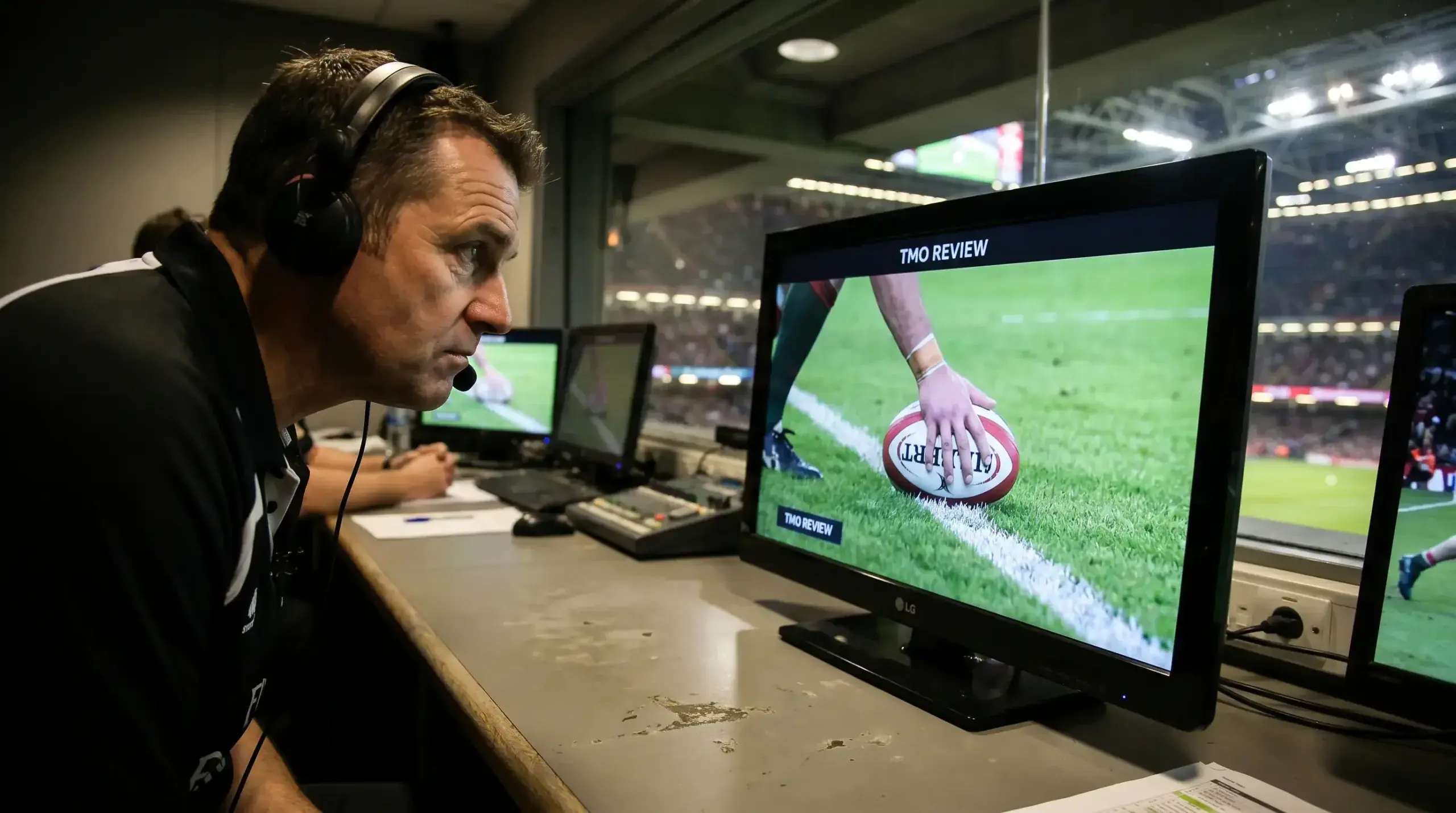
The core rule is straightforward. The bet pays out only if the player you’ve named is the first to ground the ball legally, with the try awarded by the referee or upheld on TMO review. Penalty goals and drop goals don’t qualify — only a try counts. A penalty try awarded for foul play under the posts is treated as a no-player score, and operators settle differently here, so the small print matters more on this market than almost any other.
Substitutes are the other catch. A bench player only becomes eligible once he physically crosses the touchline, and if your pick is unused, the bet typically voids. Some books pay stakes back if your selection plays no part; others insist on a minimum of one minute on the pitch. Read the rules before you stake, not after the final whistle.
Position Beats Reputation Almost Every Time
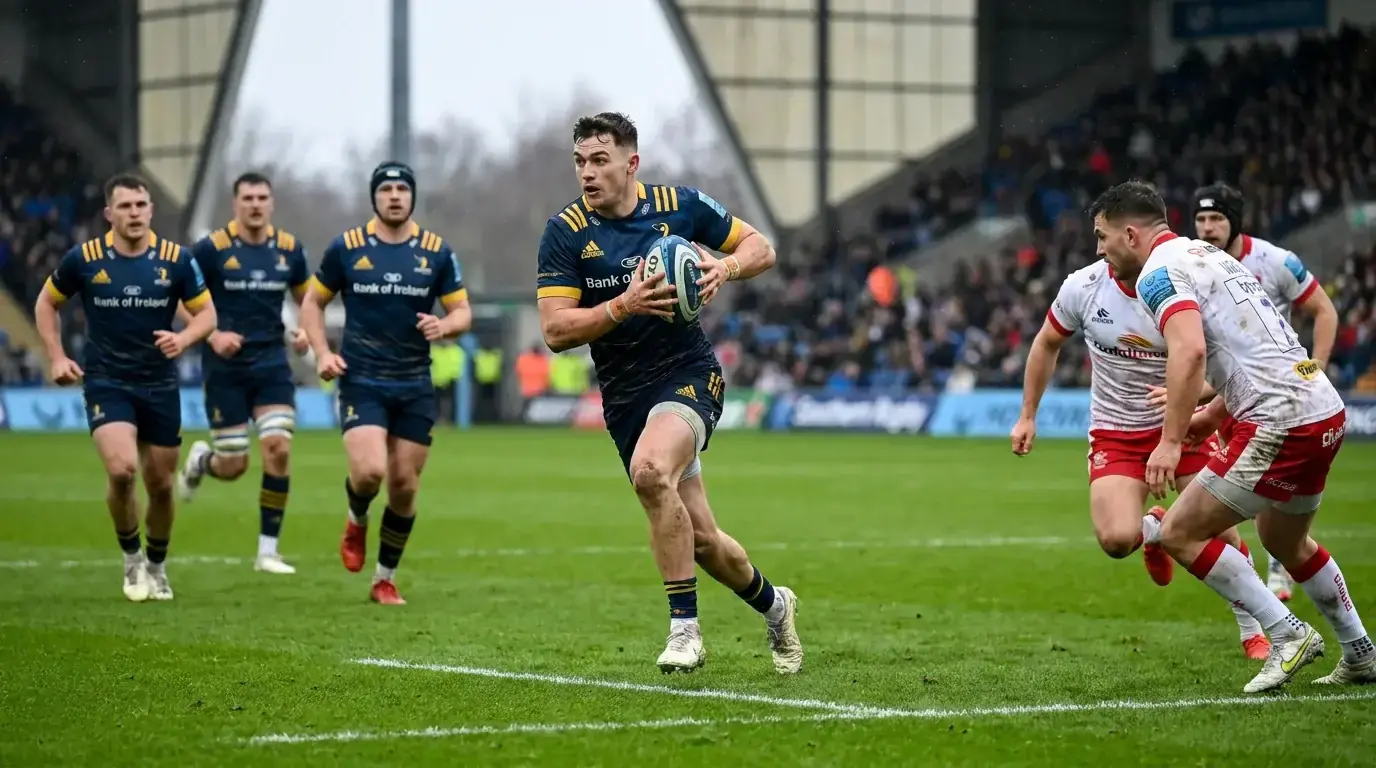
Most punters pick a try scorer the way they pick a horse — by the name, by the recent form, by the headline. The numbers tell a quieter story. Across modern Six Nations rugby, roughly two-thirds of opening tries come from the back line, with wings doing the heaviest lifting, followed by centres and fullbacks. The forwards’ share is real but concentrated in particular phases: short pick-and-go from a five-metre scrum, rolling maul finishes by a hooker or back-row, and the occasional charge-down. None of that happens in the first ten minutes very often.
That’s why my own staking on first try scorer is almost always on backs, and almost always on the back-three player who’s been winning the aerial game in recent matches. A wing who sees twelve to fifteen high-ball contests a game gets more red-zone opportunities than one who sees four. If your operator lists carries inside the opposition twenty-two as a stat, study it before you stake. Reputation tells you who’s famous; phase data tells you who’s going to be at the end of a try-scoring move.
One nuance worth holding onto for Six Nations weekends: the 2025 men’s tournament drew an aggregate gate of 1 050 465 across fifteen matches, and 108 tries were scored — an average of 7.2 per game. The first-try distribution within that 108 will not be evenly spread by position, and the books know it. Your edge lives in the positions they price a fraction too long.
The Quiet Power of “No Try Scorer”
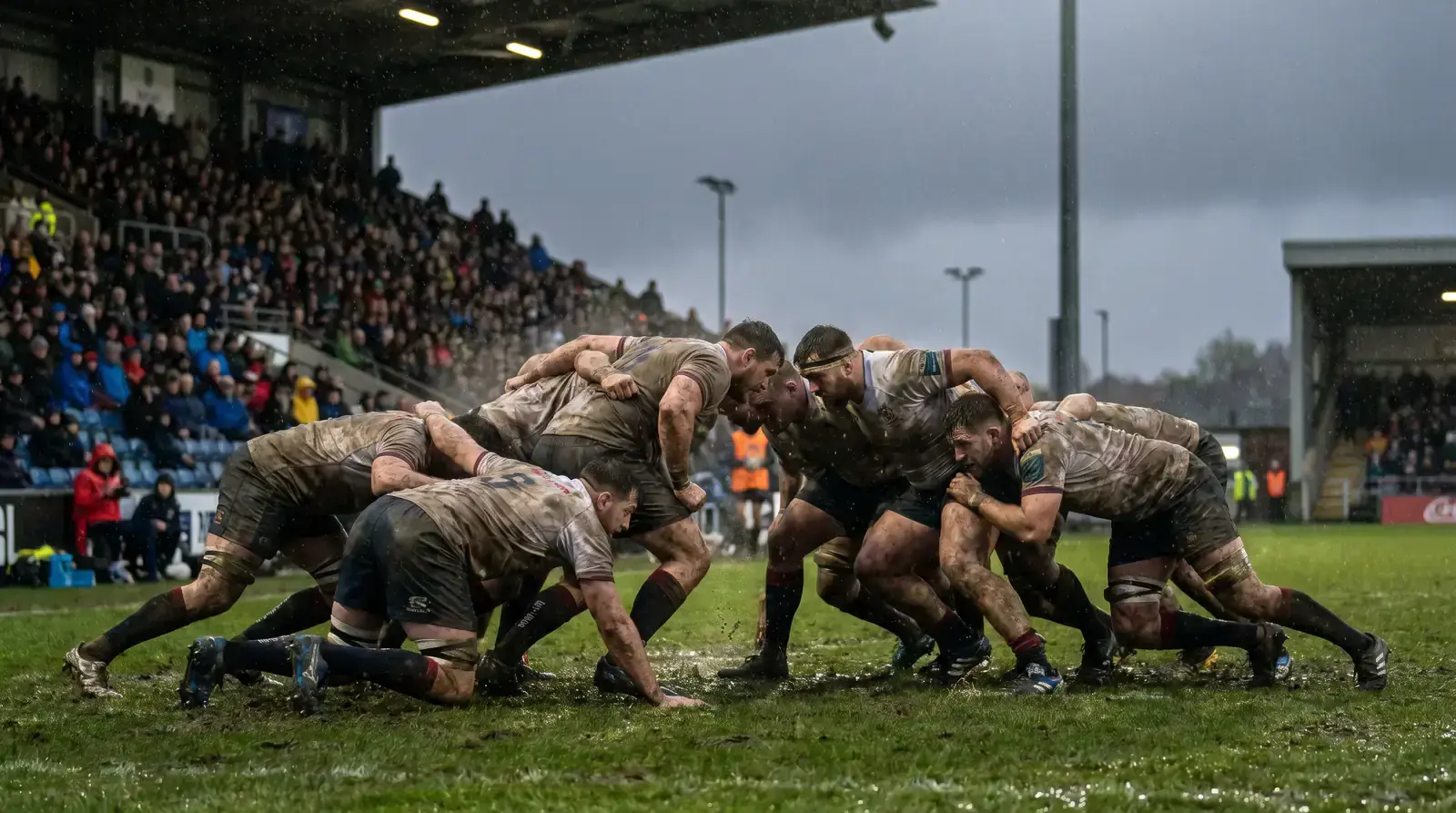
The “no try scorer” line is the option most casual punters never click, and it’s the one I find myself reaching for when the forecast is grim and the matchup is grim alongside it. A windy day at Murrayfield with Scotland hosting an attritional opponent, or a wet Wales–Italy in February with both packs leaking penalties — these are the conditions in which the opening twenty minutes can pass with three or four penalty goals and not a single try scored. The line typically pays in the 8/1 to 14/1 region, and on the right weekend it represents the best-priced limb on the entire market.
I treat it as a conditional bet, not a regular play. Two filters: a weather report I trust, and a recent head-to-head where the tries arrived after the half-hour rather than before it. Without those, “no try scorer” is a long-shot lottery ticket. With them, it’s the closest the market gets to a structural play.
Dead-Heats, TMO Calls and What Actually Happens to Your Stake
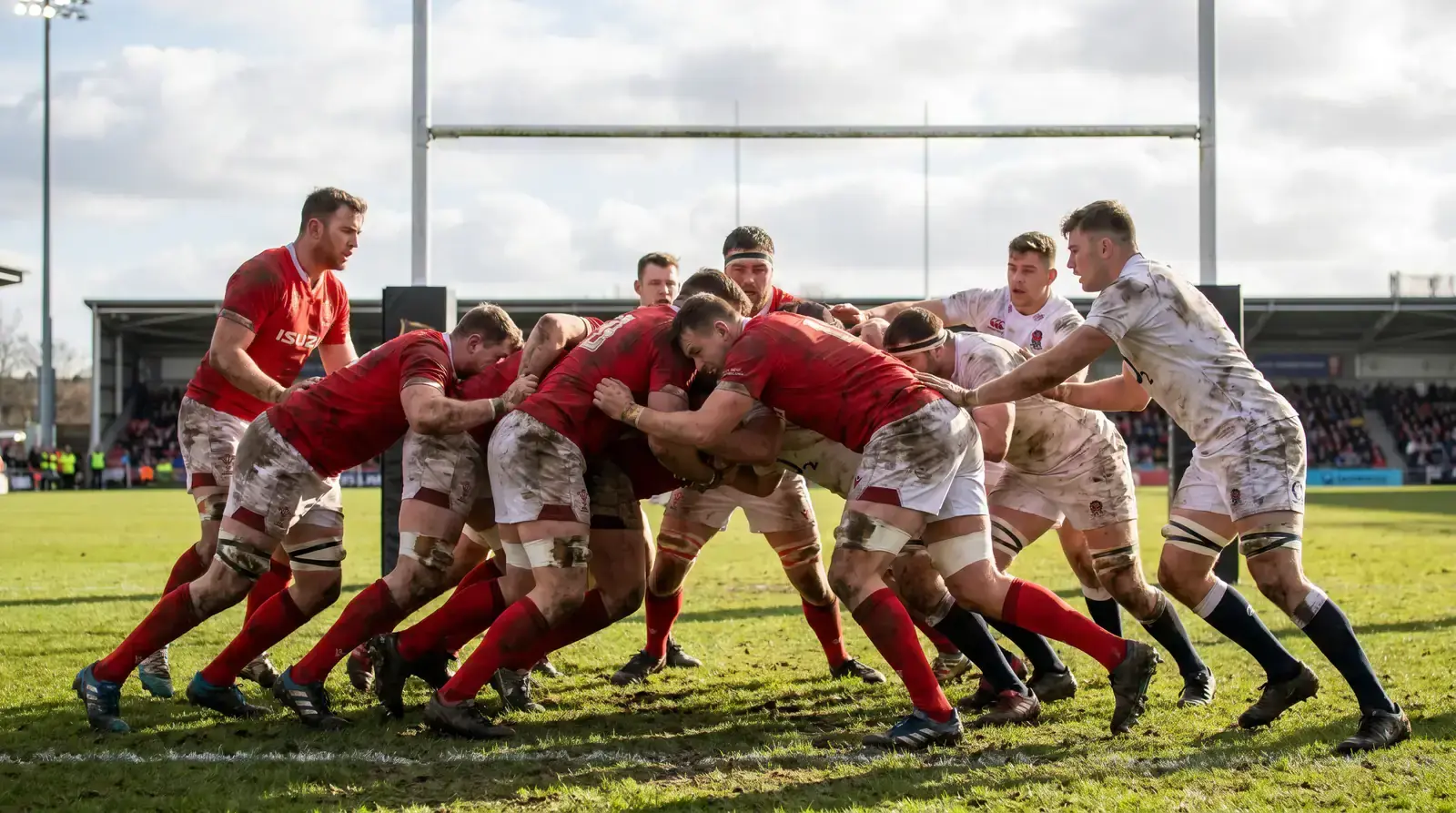
A dead-heat in first try scorer is rarer than punters assume but more brutal than it sounds. The Rules-Based scenario is a try awarded jointly — typically a maul finish where the referee can’t separate which player grounded — or two players sharing a single act of scoring under match official judgement. UKGC-licensed operators settle these under dead-heat rules: your returns are divided by the number of players ruled to have scored. If you backed one of two co-scorers at 11/1 with a £10 stake, you collect £60 rather than £120.
The TMO has rewritten this corner of the market in the last few seasons. A try that looks clean in real time can be overturned thirty seconds later for a knock-on three phases back, or for an obstruction in the lead-up. Until the referee confirms with the TMO, books often suspend the market and won’t accept settlement requests. If you’ve cashed out the moment after a try is grounded and the review then disallows it, the cash-out is honoured — but a stake that survived to “settlement” gets voided. Patience matters; the difference between an awarded try and a confirmed try is sometimes a full minute.
Why I Lean Towards the Anytime Market More Often Than Not
Here’s a number I run for every Six Nations weekend: implied probability per leg. First try scorer markets routinely carry an overround of 130 to 150 across the full set of selections, depending on how generous the book is being on the “no scorer” line. Anytime try scorer — settling on whether your player crosses at any point in the match — typically runs at 110 to 125. That’s a meaningful structural drag on the first-only market, and the only thing that justifies it is the chance to land a 12/1 selection in the first ten minutes.
So my own framework is plain. When I have a strong read on a specific back finishing the first attacking sequence — a wing who’s been targeted in the opening five minutes of his last three matches, a midfield runner who’s been used as the strike weapon at set-piece — I’ll consider first try scorer. When the read is broader — “this player is going to score, I don’t know when” — I’m always on the anytime try scorer market explained, because the maths is simply kinder. Where first try scorer wins is when a wing has been the matchday’s designated finisher in the opening quarter of recent fixtures. Anytime wins everywhere else.
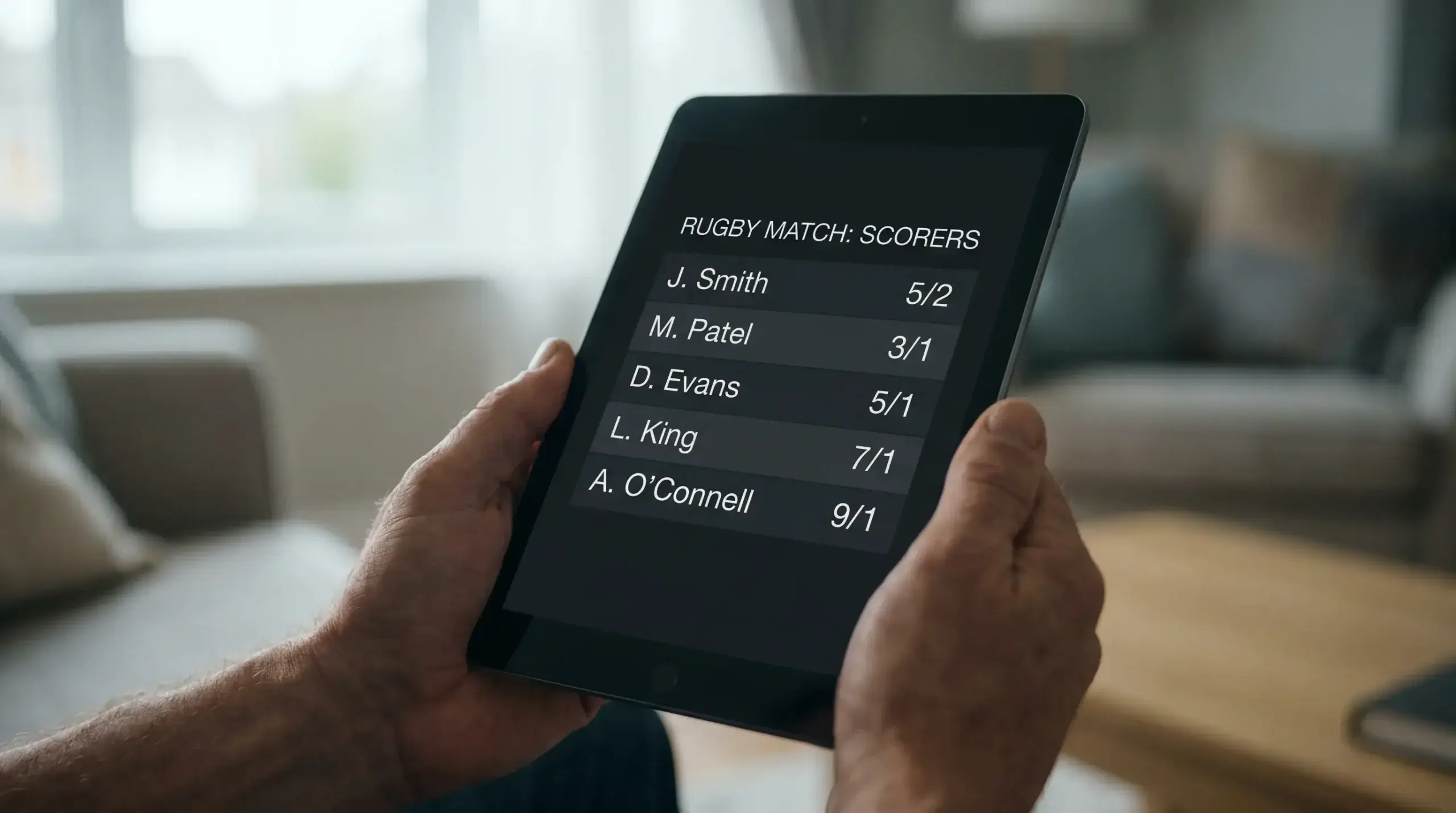
One more figure to keep the framework grounded. In-play betting now makes up more than 70 per cent of online sports betting in the UK, and first try scorer is one of the few markets that retains a pre-match-only character — by definition, once the first try is scored, the market closes. That makes it a useful counterweight to the live-betting habits most of us have built. If you find yourself in the rhythm of clicking through every momentum shift, a small first try scorer stake before kickoff is a quiet way to commit to a pre-match read and then watch the game.
