

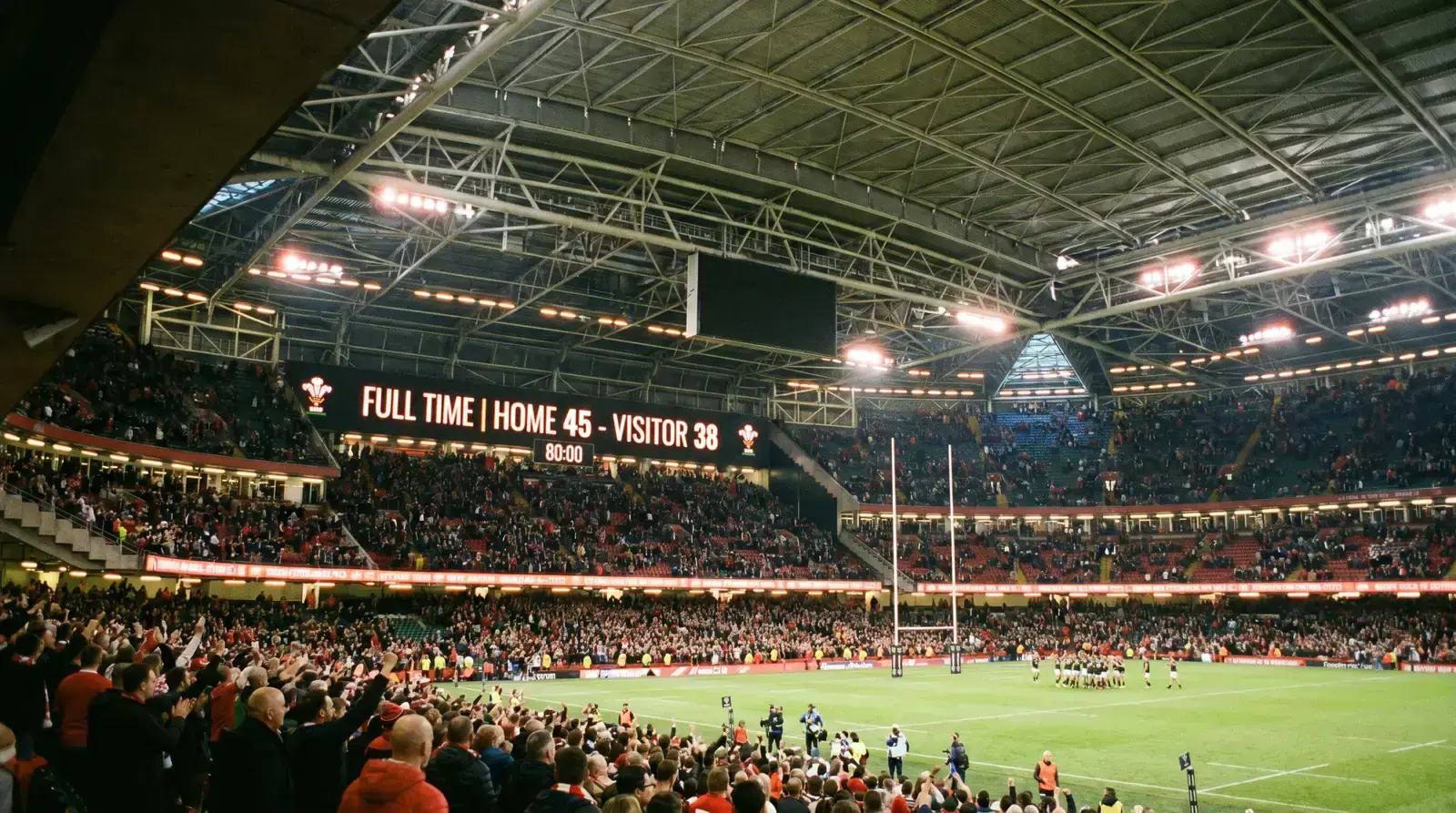
Look at any rugby card on a Saturday morning and you’ll see a number sitting next to each fixture in the totals column. Six Nations matches typically land between 41.5 and 52.5. Gallagher Premiership games usually run from 38.5 to 48.5. Top 14 in France is slightly tighter, around 35.5 to 45.5. Those numbers — the over/under totals — represent the bookmaker’s best guess at how many points both teams combined will put on the board, and they’re the second-most-staked market in rugby after match result for one simple reason: you don’t need to pick a winner.
I’ve staked totals for as long as I’ve been doing this seriously, because the bet asks a different question to the rest of the card. Not who wins, not by how much, just how the match plays. Tight, attritional, kick-heavy? Under. Free-flowing, ball-in-hand, two attack-minded defences? Over. Once you start watching rugby through that lens, the totals market makes more sense than the handicap line.
The Inputs That Build a Rugby Total
The moment team news drops, the totals model in every bookmaker’s pricing engine reweights. Four core inputs feed it. The first is average team scoring — how many points each side has put up over a defined recent window, usually the last five to ten matches. The second is opponent defensive rating — how many points each side has conceded over the same window. Those two combine into a baseline expected total.
The third input is venue. A dry pitch in Bordeaux at 18°C in October produces a fundamentally different match than a soaked Murrayfield in February. Stadium-specific historical totals matter — Twickenham averages slightly higher than Lansdowne Road, the Stade de France runs hotter on points than the Principality Stadium. The fourth is weather, and it’s the only input that can move a total by five or more points in the final twenty-four hours before kickoff. A storm forecast at Cardiff can drop a 47.5 line to 41.5 overnight.
What the model doesn’t capture well is referee tendency. A referee who’s been giving long whistle on the ruck pads scores; a referee who prefers contest at the breakdown drives totals down through more turnovers and fewer phases. I keep a private spreadsheet of referee bias across major tournaments and treat it as the soft input the public model misses. Over a season, that’s worth a meaningful edge on totals.
Team Totals: The Bet for When You Don’t Know the Outcome
A team totals bet — also called individual totals or one-sided totals — is over/under on just one side’s score. England over 24.5 points; Italy under 12.5 points. The two are independent markets, separately priced. The use case is specific: when you have a strong view on one team’s likely scoreboard contribution but no confidence in the other side’s response.
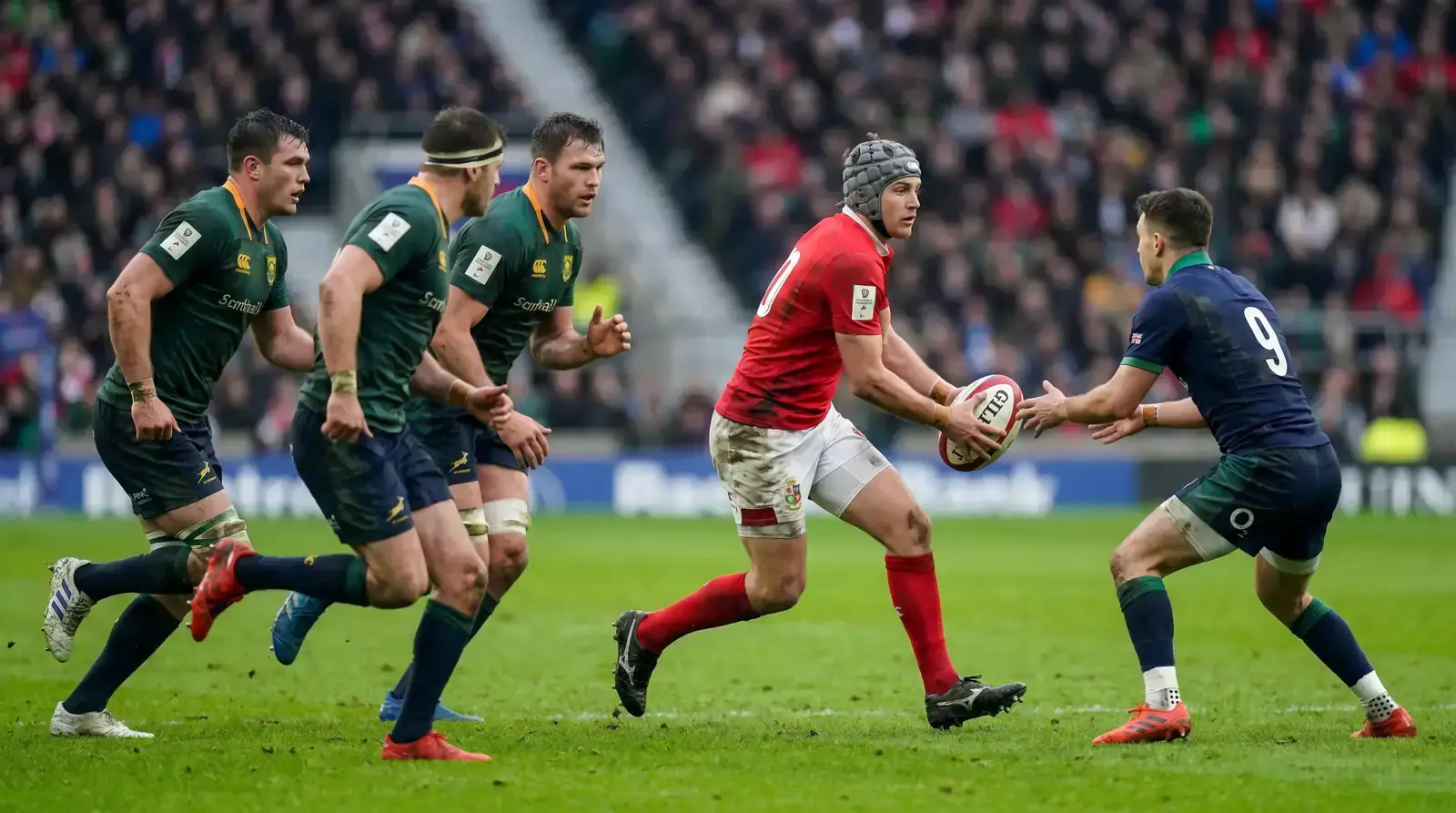
This is the market I lean on for matches where the favourite is fairly predictable but the underdog is hard to read. England versus Italy is the classic. I know roughly how many points England will score against a side they’ve beaten by 25-plus consistently. I have no idea what Italy will put up — a yellow card and the game splinters, a strong opening twenty minutes and they look credible. Team totals on England side-steps the Italian uncertainty entirely. The bet asks a tighter question and rewards a tighter answer.
One settlement note. Team totals settle on the named team’s score only, regardless of how the match goes elsewhere. England score 32, Italy score 6. England over 24.5 wins. The match total over 38.5 also wins, but a punter who staked both isn’t doubling up — they’re staking two independent positions that happen to be correlated.
First-Half and Second-Half Totals: Where the Pace Lives
Half totals are a market I underused for years, and I regret it. The split between first-half and second-half scoring in rugby isn’t fifty-fifty. Across a typical eighty minutes, the first half delivers about 45 per cent of the total scoreboard contribution. The second half pulls more points because tired legs leak tries, fitness gaps open and the trailing side starts taking risks. Late tries are a structural feature of rugby, not an accident.
That asymmetry shows up in the pricing. A 44.5 match total typically splits into a first-half line around 20.5 and a second-half line around 23.5, but the public-facing prices on these halves often look identical at evens. The bookmaker is asking which half you think will be heavier; the structural answer is the second half, but conditions can flip it. A team that scores early often dominates the first half and coasts through the second. A windy match with the wind at one team’s back in the first half can stack the first-half total above where the model has it.
The half markets are also where weather plays hardest. Wind direction reverses at half-time, and a 25 mph wind that gave one side six points of territorial advantage now gives the other side the same. Punters who back the second-half over when the trailing side has the wind are leaning into a structural edge most operators barely account for.
The Alternative Totals Ladder
Behind the headline total on a UKGC-licensed bookmaker’s rugby card sits a ladder of alternative lines, usually five to seven in each direction. For a match priced at 44.5, you’ll typically see 32.5, 35.5, 38.5, 41.5, 44.5, 47.5, 50.5, 53.5. Each has its own over and under price. The further from the headline, the more extreme the implied probability — under 32.5 might be 9/1; over 53.5 a similar number.

The reason to look at the ladder is that not every match is a 44.5. A wet, wind-heavy fixture between two defence-first sides might be more sensibly bet at the under 38.5 line, paying 5/2, than at the headline under 44.5 paying evens. Same view, different reward. Conversely, a televised attack-versus-attack matchup between two attack-minded sides might justify the over 50.5 at 5/2 if your model has the expected total at 52 or higher. The ladder rewards punters who have a tighter point estimate than the public line.
How Totals Sit Next to Winning Margin
A common mistake is to treat totals and winning margin as substitutes. They’re independent. A 60-point total can be 35–25 (margin 10) or 50–10 (margin 40), and both settle the over but differently for the margin market. Conversely, a low 25-point total can still be lopsided — a 22–3 finish has a wider margin than a 25–18 finish, even though both share the same total.
The independence is useful. On matches where I have a strong view on the total but no confidence on the margin, I stake the total alone. On matches where I have a strong view on margin band but the total could be anywhere, I stake how totals relate to winning margin markets through the dedicated margin product instead. Stacking both only works when the two views align and the bet builder pricing allows for a correlated combination — and even then, the correlation engine usually prices that combination so tightly that the structural value disappears.
The Six Nations Reality Check
The 2025 men’s Six Nations drew 1 050 465 spectators across the tournament with an average of 7.2 tries per match. That tries-per-match figure translates roughly to 50 points of try-derived scoring per fixture, with kicks adding another 8 to 12. The total points per match averaged comfortably above the 41.5 line that opens most matchups — but tournament averages hide enormous variance. The opener that year, France’s 43–0 win over Wales, drew a 7.4 million peak French TV audience and finished below the typical 44.5 line by a single point on totals. A heavy favourite running away from a lopsided fixture often produces a high score for one side and almost nothing from the other; the total stays modest even as the margin balloons.

The lesson over a Six Nations cycle is that totals lines do their job most of the time. Edges live in conditions, referee tendency and the alternative ladder — not in betting against the headline line on every match. If you treat over/under as a default position bet, the bookmaker’s edge grinds you down. If you treat it as a conditional position that you take only when you have a specific view on pace, weather or refereeing, it becomes one of the better markets in rugby.
